Gifts for someone who has everything: how to choose something they'll actually use
Five kinds of present that work for the person who wants nothing: experiences, consumables, upgrades, personalised things and your time. What to check before you buy.
By Sam · Updated 5 November 2026

- The person who has everything doesn't need more stuff. Choose something that gets used up, used instead of an older version, or enjoyed and then gone.
- Five kinds of present reliably work: an experience, a consumable they'd never buy for themselves, an upgrade to something they already use daily, a personalised version of an everyday thing, or your time.
- Vouchers carry rules. Which? says expiry dates are allowed as long as the buyer was told about them at purchase, and you're unlikely to swap an unwanted voucher for cash.
- If you order something personalised or perishable online, there's no 14-day cooling-off period, so get the details right before you pay.
- When in doubt, give something small and consumable with a handwritten note. It's never wrong, and it's never clutter.
Why this person is hard to buy for
Some people are hard to buy for because they have specific tastes. The person who has everything is a different problem. They have the means to buy what they want, so anything they wanted they already own, and anything they don't own they've decided against. Buying them an object is a guess at a preference they've already expressed by not buying it.
That sounds bleak, but it points to the answer. The gifts that land for this person are not objects they lack. They're things that are hard to buy for yourself: an afternoon someone else has organised, a treat that feels indulgent when you pick it up yourself but delightful when it arrives, a better version of a thing they use every day without thinking about it, or a few hours of your time.
This guide walks through those five kinds of present, what to check before you buy each one, and the consumer rules that matter when you're giving vouchers or ordering something made to order. Our gift guide for people who have everything has the product picks; this page is the thinking behind them.
Our picks for this guide
 Photo: Amazon
A teenager or group of grown-ups who like trading, bargaining and a game that fills a whole evening.
as of 23 Nov 2026, 18:27 GMT · Details
Product prices and availability are accurate as of the date/time indicated and are subject to change. Any price and availability information displayed on Amazon.co.uk at the time of purchase will apply to the purchase of this product.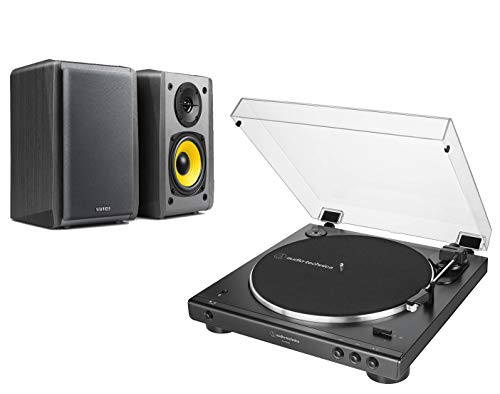 Photo: Amazon
A man who has started buying records but wants to play them through the Bluetooth speaker he already owns.
as of 23 Nov 2026, 18:27 GMT · Details
Product prices and availability are accurate as of the date/time indicated and are subject to change. Any price and availability information displayed on Amazon.co.uk at the time of purchase will apply to the purchase of this product. Photo: Amazon
Someone who owns every gadget already but still drinks their tea cold because they got distracted.
as of 23 Nov 2026, 18:27 GMT · Details
Product prices and availability are accurate as of the date/time indicated and are subject to change. Any price and availability information displayed on Amazon.co.uk at the time of purchase will apply to the purchase of this product.Experiences: something to look forward to
An experience makes a good gift for this person because it doesn't need a shelf. A meal out, a day somewhere they'd not think to go, tickets to something, a course in a thing they've mentioned once. The memory lasts, and nothing needs storing.
The catch is practical. Experience vouchers come with terms, and Which? is clear that those terms bind the buyer: "When purchasing a gift voucher or card, you're bound by the terms made or known at the time of purchase - even if you've given the gift voucher to someone else as a present." If the recipient hits a problem, Which? says they'll need to come back to you, because "If you didn't purchase the voucher, you'll need to ask the person who gave it to you what the T&Cs are."
So before you buy, read the expiry date, find out whether the experience has to be taken before that date or only booked by it, and check that the venue still offers it. Which? found that most voucher firms refund unused vouchers to the original purchaser within 30 days of purchase, which gives you a short window if you realise you've picked the wrong thing. Our experience gifts guide goes through all of this in detail.
Fixed-date tickets are simpler than open vouchers in one way and riskier in another. There's nothing to redeem, but you've chosen the day for them. For someone with a full diary, an open voucher with a long expiry is usually the kinder choice.
- Check the expiry date and whether it's a book-by or take-by date.
- Check the venue still offers the experience and isn't booked out for months.
- Keep your receipt and the voucher terms; the recipient may need them.
- Tell the recipient roughly when the voucher runs out when you hand it over.
Consumables: the gift that disappears
The best present for someone who wants nothing is often something that gets used up. Good coffee, a bottle they'd not open on a Tuesday, cheese from somewhere specific, proper chocolate, flowers that arrive every month, bath things that are too expensive to feel sensible. The point is that it's a notch above what they'd buy for themselves, and that it's gone in a few weeks.
Consumables also sidestep the problem of taste. You don't have to guess whether they'd like a particular object in their home. You only have to know one thing they enjoy, and buy a better version of it.
Two practical notes. First, perishable things can't be sent back if you change your mind. Citizens Advice says the online cooling-off period doesn't apply to "something that deteriorates quickly - like flowers or food", so check delivery dates and addresses carefully. Second, if you're sending food or drink to someone's home, make sure someone will be in, or that the courier can leave it safely. A box of good cheese left on a doorstep for two days is a bad present.
If you'd like the consumable to keep arriving, a subscription can work, but read our subscription gifts guide first. The difference between a prepaid three-month gift and an auto-renewing plan matters a lot when it's someone else's card on file.
Upgrades: a better version of something they already use
Look at what this person uses every day and ask whether it's the best version. The kitchen knife that's fine. The umbrella that's fine. The headphones, the wallet, the pen, the slippers, the kettle. People who have everything often have perfectly adequate versions of ordinary things, because they'd feel silly replacing something that works.
That's your opening. A noticeably better version of a daily object is a present they'll use within the hour and keep using for years, and it doesn't add to the pile because it replaces something. The trick is to pick a thing they use often enough to notice the difference, and to go for quality over novelty. Nobody needs a gadget that does the same job as the thing they already have, only with an app.
Be careful with anything that needs to fit or match: the right size of glove, the right style of watch strap, the right kind of coffee grinder for their machine. If you can't check without spoiling the surprise, pick a category where fit doesn't matter.
For the return rules, remember that a shop doesn't have to take back a non-faulty item bought in person. Citizens Advice puts it plainly: "You don't have an automatic right to get your money back if you just change your mind about something you've bought and there's nothing wrong with it." Many shops do offer returns anyway, and Citizens Advice notes that "lots of shops will say you can return items within 14 or sometimes even 30 days, as long as they're not used." Ask for a gift receipt and check the policy before you buy.
Personalised: the everyday thing with their name on it
Personalisation is the easiest way to make an ordinary object impossible to already own. A notebook, a mug, a keyring, a map of the place they grew up, a print of a date that matters, a cushion with the dog on it. These things aren't expensive, and they say something an off-the-shelf object can't: that you were thinking of them specifically.
The rules are different for made-to-order items, and you need to know them before you click. Citizens Advice explains that the 14-day cooling-off period on online purchases doesn't cover "an item that was personalised or custom-made for you". In practice, that means that once the maker starts on it, you can't change your mind and send it back for a refund. You'd still have rights if it arrived faulty or not as described, but a typo in the name you typed is on you.
So proof it twice. Check spellings, dates and the exact wording, and if the maker sends a proof to approve, read it slowly before you say yes. Making times vary, and the Christmas cut-off for a personalised item is always earlier than the shop's general last order date. Our guide to ordering personalised gifts in time has more on timing and the rules.
Your time: the present that costs nothing and means the most
For the person who genuinely wants nothing, the most valuable thing you can give is a few hours. A day out together. A promise to cook Sunday lunch once a month. Help with a job they've been putting off. Driving them somewhere they want to go. For an older relative, this is often the only present that really registers.
This isn't sentimental padding. The NHS lists giving as one of its five steps to mental wellbeing, and says that "Research suggests that acts of giving and kindness can help improve your mental wellbeing". Among its examples is "spending time with friends or relatives who need support or company". The gift works both ways.
The practical risk is that a vague promise never happens. Make it concrete: write the date in both diaries, or give a card with three specific offers and let them pick. A voucher for "a day out" is a nice gesture; a booked table for lunch on the second Saturday in January is a present.
- Pick something specific: a job, a trip, a regular meal, a lift.
- Put a date on it, or give them a short menu of dates to choose from.
- Write it down so it feels like a gift rather than an offer.
- Follow through. The present is the doing, not the card.
Vouchers and gift cards: what you need to know
If you fall back on a gift card, go in with your eyes open. Which? says "Gift vouchers and cards do expire eventually and the time you have to use your voucher can vary." It adds that "Expiry dates are allowed as long as the person buying the voucher was made aware of this at the time of purchase." Check the date before you buy, and hand it over with enough time to use it.
Treat a gift card like cash. Which? warns that "Gift cards and vouchers are like cash. So, if you lose one you might be out of luck." Keep a note of the card number and your proof of purchase, because if the recipient loses it, the retailer will usually want the buyer to prove the purchase.
If the recipient doesn't want it, don't expect money back. Which? says "It's unlikely you'll be able to exchange an unwanted voucher for cash." And if the shop goes under, the card may become worthless: Which? explains that "the administrators can decide to stop honouring gift vouchers at any point." A voucher for a big, stable retailer, or an experience voucher that can be swapped between many providers, is safer than one for a small chain.
A short checklist before you buy
Whatever you choose, run through these questions. They cover most of the ways a present for this person goes wrong.
- Does it take up space? If yes, is it replacing something, or is it a consumable?
- Does it depend on a taste you're guessing at? If yes, pick a category where taste matters less.
- Is it personalised or perishable? If yes, you can't change your mind after ordering, so check every detail now.
- Is it a voucher? Check the expiry, keep the receipt, and tell the recipient the date.
- Could you give your time instead? For many people, that's the one they'll remember.
Our picks for this guide
Photo: AmazonA teenager or group of grown-ups who like trading, bargaining and a game that fills a whole evening.
as of 23 Nov 2026, 18:27 GMT · Details
Product prices and availability are accurate as of the date/time indicated and are subject to change. Any price and availability information displayed on Amazon.co.uk at the time of purchase will apply to the purchase of this product.Photo: AmazonA man who has started buying records but wants to play them through the Bluetooth speaker he already owns.
as of 23 Nov 2026, 18:27 GMT · Details
Product prices and availability are accurate as of the date/time indicated and are subject to change. Any price and availability information displayed on Amazon.co.uk at the time of purchase will apply to the purchase of this product.Photo: AmazonSomeone who owns every gadget already but still drinks their tea cold because they got distracted.
as of 23 Nov 2026, 18:27 GMT · Details
Product prices and availability are accurate as of the date/time indicated and are subject to change. Any price and availability information displayed on Amazon.co.uk at the time of purchase will apply to the purchase of this product.Give something that leaves no trace: an afternoon, a thing that gets eaten, a better version of what they already use, or a few hours of your time. If it would sit in a cupboard, it's not the present for this person.
Questions
What do you buy someone who says they don't want anything?
Something that isn't a thing. An experience you've booked, a consumable a notch above what they'd buy themselves, or a concrete offer of your time with a date on it. If you want to give an object, make it an upgrade to something they already use daily.
Can you get a refund on a gift voucher if the person doesn't want it?
Usually not for cash. Which? says it's unlikely you'll be able to exchange an unwanted voucher for cash, though experience voucher companies often let you exchange within their range. Which? also found most experience voucher firms refund the original purchaser on unused vouchers within 30 days of purchase, so act quickly if you've bought the wrong thing.
Do gift cards expire in the UK?
Yes, they can. Which? says expiry dates are allowed as long as the person buying the voucher was made aware at the time of purchase. Check the date before you buy and tell the recipient when you hand it over.
Can I return a personalised gift if I change my mind?
Not under the usual online cooling-off rules. Citizens Advice says the 14-day cooling-off period doesn't apply to an item that was personalised or custom-made for you. You still have rights if it arrives faulty or not as described.
Is giving an experience better than giving a present?
For someone who has everything, often yes, because it doesn't add to what they own. The trade-off is that vouchers have expiry dates and terms that bind the buyer, so check the dates, keep the receipt, and make sure the venue still offers the experience before you buy.
Read next
 Experience gifts in the UK: what to check before you buy a voucher or book a dateHow to give an experience that actually happens: expiry and booking rules, refunds, weather and location, open…
 Personalised gifts: how far ahead to order, and why you can't send them backMaking times, proofs and the returns rules for personalised items. Why the 14-day cooling-off period doesn't a…
 Subscription gifts: magazines, coffee and boxes, and how to avoid giving someone a billHow to give a magazine, coffee or box subscription without it rolling on to someone's card. Prepaid versus aut…
 How to choose perfume or aftershave as a gift: families, strengths, sizes and safe choicesFragrance families, what EDT and EDP actually mean, which bottle size to buy, gift sets versus bottles, and ho…