First bike buying guide: balance bike or stabilisers, wheel sizes by height, helmets and shops
How to buy a child's first bike in the UK: why a balance bike beats stabilisers, which wheel size fits which height, what to check, the helmet standard and where to buy.
By Sam · Updated 5 November 2026
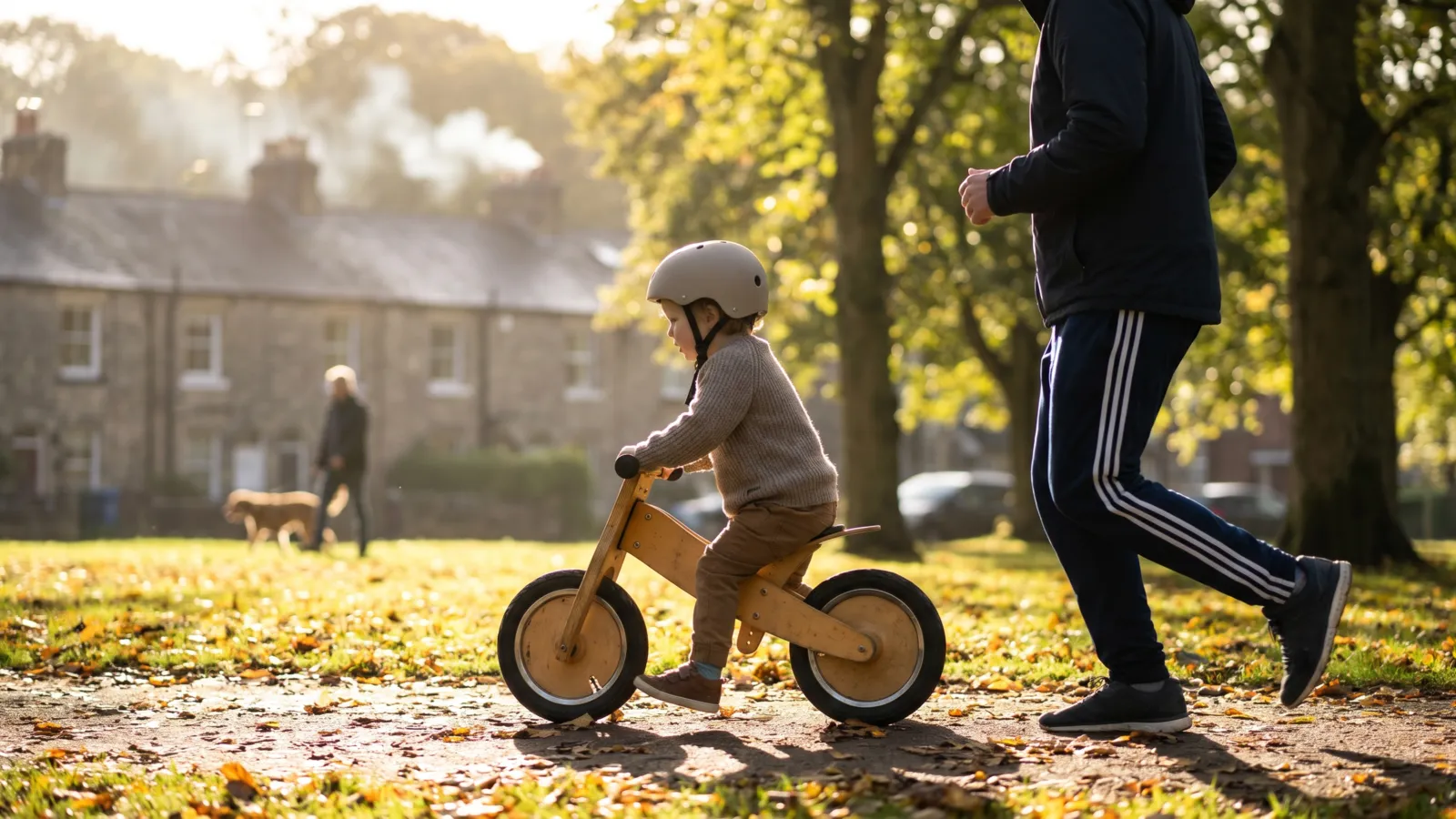
- Start with a balance bike, not stabilisers. Which? says most are recommended from 18 months, and they teach the one hard skill, balancing, before pedals get in the way.
- Size by the child's inside leg, not their age. On a balance bike both feet must be flat on the ground. On a pedal bike, tiptoes on the ground when sitting on the saddle.
- Wheel sizes run 12, 14, 16, 20 and 24 inches. A first pedal bike is usually 14 or 16 inch at around 4 to 6. Never buy big to grow into.
- Stabilisers teach a child to pedal while leaning the wrong way. If you use them, raise them so the bike leans, and take them off early.
- Buy a helmet that fits properly. The Highway Code says a correctly fitted helmet reduces the risk of head injury; Which? points to BS EN 1080 for young children. See current picks for 4 year olds and 5 to 7 year olds.
Balance bike or stabilisers: the only real debate
For decades a first bike meant a small pedal bike with stabilisers bolted to the back wheel. The child learned to pedal and steer, then one day the stabilisers came off and a parent ran up and down the pavement holding the saddle. The balance bike route reverses the order. The child learns to balance first, on a bike with no pedals, and pedalling is added later in an afternoon.
Which?'s balance bike guide describes it plainly: "A balance bike is a simplified version of an adult bicycle, designed to teach young children how to balance and steer." The bikes "don't have pedals or gears, so toddlers must use their feet to propel and stop themselves", and they let children "learn balance at their own pace". Which? adds that "Most balance bikes are recommended for children over 18 months old". RoSPA includes both routes in its advice to parents: "Let children get used to cycling with stabilisers or a balance bike to help them build confidence, before moving on to a normal bike".
Our view, and the view of most people who have taught both ways, is that balance bikes win. A 3 year old who has spent a year gliding on a balance bike gets on a pedal bike and rides. A 5 year old who has spent a year on stabilisers has learned to pedal with the bike propped upright and leans the wrong way in corners, and has to unlearn it. Stabilisers are not harmful, but they delay the real lesson.
The one case for stabilisers is a child who comes to cycling late, at 6 or 7, with no balance bike years behind them. Even then, the quicker route is to take the pedals off a small pedal bike, drop the saddle so both feet are flat, and use it as a balance bike for a few weeks. Several first bikes are sold with removable pedals for exactly this. Which? describes one in its five year olds guide: "The pedals are designed to be removable, so it can be used as a balance bike until kids are confident enough to try using the pedals."
Our picks for this guide
 Photo: Amazon
A three to six year old who loves the Disney princesses and is just getting into jigsaws.
as of 23 Nov 2026, 18:27 GMT · Details
Product prices and availability are accurate as of the date/time indicated and are subject to change. Any price and availability information displayed on Amazon.co.uk at the time of purchase will apply to the purchase of this product. Photo: Amazon
A child of four to seven who likes fast, loud games with a bit of chaos.
as of 23 Nov 2026, 18:27 GMT · Details
Product prices and availability are accurate as of the date/time indicated and are subject to change. Any price and availability information displayed on Amazon.co.uk at the time of purchase will apply to the purchase of this product.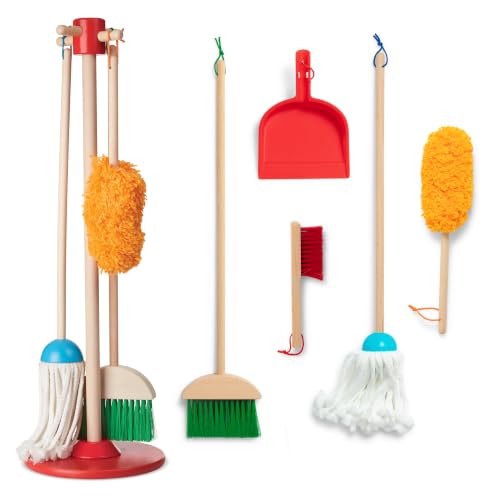 Photo: Amazon
A three to six year old who insists on helping with the housework.
as of 23 Nov 2026, 18:27 GMT · Details
Product prices and availability are accurate as of the date/time indicated and are subject to change. Any price and availability information displayed on Amazon.co.uk at the time of purchase will apply to the purchase of this product.Choosing a balance bike
Balance bikes come with 10, 12 and 14 inch wheels. Which? notes that "10, 12 and 14-inch wheels are the most common type. Larger wheels can offer improved stability, but they're no good if your child is raised too high off the ground." That last clause is the whole sizing rule: the child must sit on the saddle with both feet flat on the floor and a bend in the knee, because the feet are the engine and the brakes.
Measure the inside leg from crotch to floor with shoes on and compare it to the bike's minimum saddle height, which the maker should state. The saddle should start at or a little below the inside leg measurement. An adjustable saddle and bars, which Which? says most popular balance bikes have, then carry the bike through two or three years.
Tyres and brakes are the other two choices. Which? sets them out: "foam tyres are common as they're cheaper for manufacturers to produce. However, air tyres offer better traction and cushioning, making them a better choice for uneven terrain." Foam is fine for pavements and can't puncture. Air is better for parks and tracks. On brakes, Which? says they "can give your child more confidence and serve as a good practice before a 'proper' bike. Make sure your child can easily reach the brakes before setting off." Many toddler balance bikes have none, and that is acceptable for a 2 year old who stops with their feet, but a rear brake is worth having from 3.
Weight is the thing the box never shouts about. A balance bike should be light enough for the child to pick up when they drop it, which means a light metal or wooden frame. Which? notes that most "are made from lightweight metal". If a bike is heavier than a third of the child's weight, look for a lighter one. Prices run from around £30 for a basic steel bike to £100 and up for a light aluminium one, and the light ones are usually worth it because they get ridden more and sell on well.
First pedal bike: wheel sizes by height
Children's pedal bikes are sized by wheel diameter in inches, not frame size. The common sizes are 12, 14, 16, 20 and 24 inch, with 26 inch and small adult frames after that. Age is a poor guide because children of the same age vary by a foot in height, so measure. The figures below are the rough bands most UK bike shops use, and every maker publishes its own chart, which should take precedence.
- 12 inch wheels: roughly 85 to 100cm tall, inside leg around 35 to 42cm. Ages 2 to 4. Usually sold with stabilisers; better bought as a balance bike.
- 14 inch wheels: roughly 95 to 110cm, inside leg around 40 to 50cm. Ages 3 to 5. The usual first pedal bike after a balance bike.
- 16 inch wheels: roughly 105 to 120cm, inside leg around 45 to 55cm. Ages 4 to 7. The most common first pedal bike.
- 20 inch wheels: roughly 115 to 135cm, inside leg around 55 to 65cm. Ages 6 to 9. Gears appear at this size.
- 24 inch wheels: roughly 130 to 150cm, inside leg around 65 to 75cm. Ages 8 to 12.
- Whatever the chart says, the child should be able to sit on the saddle and touch the ground with the balls of both feet, and stand over the top tube with clearance. If either fails, it is the wrong size today.
What to check on the bike itself
Weight first, again. A cheap 16 inch bike can weigh more than half the child riding it, and that is the single biggest reason first bikes are hated. Aluminium frames, narrow tyres and no suspension keep the weight down. Suspension forks on a child's bike are nearly always decoration that adds weight and nothing else.
Brakes next. Children's hands are small and weak, so the levers need to be short-reach and easy to pull. Try them with the child's hand. A back-pedal brake, found on some 12 and 14 inch bikes, is simpler for a 3 year old but confuses the move to hand brakes later. From 16 inch, two hand brakes are standard and right.
Then the drivetrain. A first pedal bike should be single speed with a chainguard. Gears arrive at 20 inch and are useful from about 7. Check the chainguard covers the top of the chainring so trousers and fingers stay clear, and check the pedals are plastic with a decent grip rather than slippery.
Finally, the fit at the bars. The child should reach the grips with a slight bend in the elbows and not have to lean far forward. Most children's bikes come with a bell and reflectors by law; lights are needed only if the bike will be ridden after dark, which a first bike shouldn't be.
Helmets, and getting one to fit
The Highway Code's Rule 59 says: "You should wear a cycle helmet that conforms to current regulations, is the correct size and securely fastened. Evidence suggests that a correctly fitted helmet will reduce your risk of sustaining a head injury in certain circumstances." There is no law requiring one for children or adults, but every safety body recommends it. RoSPA's advice to parents is to "Encourage children to wear hi-visibility clothing and a bike helmet for their own safety".
Two standards cover the helmets you'll see. EN 1078 is the general cycle helmet standard and most children's helmets meet it. EN 1080 is the standard for young children's helmets and its distinctive feature is a buckle that releases under a steady pull, so a helmet left on while climbing at the playground can't catch and strangle. Which?'s advice for the under-fives is to buy "a helmet that conforms to BS EN 1080, incorporating a safety-release buckle". For school-age children either is fine.
Fit is what makes a helmet work. Measure around the head just above the eyebrows and buy the size that covers it, then adjust the dial at the back until the helmet stays put with the strap undone. It should sit level, a finger or two above the eyebrows, with the straps forming a V under each ear and room for just two fingers under the chin strap. Replace any helmet that has had a hard knock, and don't buy a second-hand helmet because you can't see what it has been through.
Which? notes that balance bikes and scooters usually don't "come with helmet or additional safety gear", and the same is true of pedal bikes. Budget £15 to £35 for a decent child's helmet and buy it the same day as the bike.
Where to buy, and whether second-hand is sensible
Bike shops are the best place for a first pedal bike because someone will size it, set the saddle and check the brakes, and because the bike arrives built. Halfords, Decathlon and the independent shops all do this. Supermarkets and online marketplaces sell cheaper bikes that arrive in a box, often with the brakes and bars needing adjustment, and the saving is usually eaten by weight and by the parts that fail. Which?'s five year olds guide picks a Decathlon bike precisely because it is "designed for first-time riders aged three to five years" with removable pedals.
Balance bikes are simpler and fine to buy online, so long as you've measured the inside leg against the stated minimum saddle height. Toy shops and the big online retailers carry the well-known brands, and the light ones hold their value.
Second-hand is a good route for children's bikes, which are outgrown in two years and often barely used. Check the frame for cracks and bent tubes, spin the wheels to see they run true, pull both brakes hard, and look at the chain for rust. A used bike from a quality maker is a better bike than a new one from the bottom of a supermarket range. Don't buy a used helmet.
Several makers and shops now run trade-in and rental schemes for children's bikes, which suit families who want a light bike at each size without paying full price each time. Worth asking about if your local shop offers one.
Learning to ride and the first rides out
If the child has had a balance bike, the pedal bike lesson is short. Drop the saddle so both feet touch, find a gentle grassy slope, and let them glide down with feet off the ground, then add the pedals. Most children ride within an hour. If they haven't, take the pedals off the new bike and spend a couple of weeks on balance first.
Keep early rides off the road. The Highway Code is clear that "You MUST NOT cycle on a pavement", but a young child learning on a quiet pavement or park path with a parent walking beside them is how every child learns, and the rule is aimed at adults. Parks, cycle tracks and traffic-free trails are the place to build confidence.
Before any road riding, get the child trained. RoSPA says to "Take advantage of any cycle training that is offered at school" and describes Bikeability as "a standardised cycle training programme, which should give parents and carers confidence" that children who pass "are capable of cycling safely on the roads". It suggests taking children on quiet roads only once they "have already had some experience and training (e.g. passed Bikeability Level 2)". Most primary schools offer Bikeability around Year 5 or 6. Until then, the bike is for parks, paths and the pavement beside you.
Our picks for this guide
Photo: AmazonA three to six year old who loves the Disney princesses and is just getting into jigsaws.
as of 23 Nov 2026, 18:27 GMT · Details
Product prices and availability are accurate as of the date/time indicated and are subject to change. Any price and availability information displayed on Amazon.co.uk at the time of purchase will apply to the purchase of this product.Photo: AmazonA child of four to seven who likes fast, loud games with a bit of chaos.
as of 23 Nov 2026, 18:27 GMT · Details
Product prices and availability are accurate as of the date/time indicated and are subject to change. Any price and availability information displayed on Amazon.co.uk at the time of purchase will apply to the purchase of this product.Photo: AmazonA three to six year old who insists on helping with the housework.
as of 23 Nov 2026, 18:27 GMT · Details
Product prices and availability are accurate as of the date/time indicated and are subject to change. Any price and availability information displayed on Amazon.co.uk at the time of purchase will apply to the purchase of this product.Measure the child's inside leg, shoes on, and compare it with the bike's minimum saddle height. On a balance bike both feet must sit flat on the floor. On a pedal bike the balls of both feet should touch. Get that right and almost everything else about a first bike follows.
Questions
Is a balance bike better than stabilisers?
For most children, yes. A balance bike teaches balancing, the hard part, from around 18 months, and pedals are added later in an afternoon. Stabilisers teach pedalling but hold the bike upright, so the child leans the wrong way and has to relearn. RoSPA's advice mentions both as a way to build confidence.
What age is a balance bike for?
Which? says most balance bikes are recommended for children over 18 months old, with adjustable saddles that carry some models to around 5. The real test is that the child can sit on the saddle with both feet flat on the floor.
What size bike should a 4 year old have?
Usually 14 inch wheels, or 16 inch for a tall 4 year old, but measure rather than guess. The child should sit on the saddle and touch the ground with the balls of both feet, and stand over the frame with clearance. Each maker publishes a height chart.
What size bike should a 6 year old have?
Most 6 year olds fit a 16 inch bike, and taller ones a 20 inch. Use the maker's height chart and check the child can touch the ground from the saddle. Gears start to appear at 20 inch and are useful from about 7.
Do children have to wear a bike helmet in the UK?
No law requires it, but the Highway Code says you should wear a correctly fitted helmet that conforms to current regulations, and RoSPA encourages children to wear one. For young children Which? points to BS EN 1080 helmets with a safety-release buckle.
Where is the best place to buy a child's first bike?
A bike shop, because the bike arrives built, sized and with the brakes set. Decathlon, Halfords and independents all do this. Balance bikes are simpler and fine to buy online once you've matched the saddle height to the child's inside leg. Good used bikes are worth considering; used helmets are not.
Sources (6)
- Which?: Best balance bike, how to buy a two-wheeler for your child (read 5 November 2026)
- Which?: Best Christmas gifts for five-year-olds, first bike entry (read 5 November 2026)
- Which?: Best Christmas gifts for four-year-olds 2026, helmet advice (read 5 November 2026)
- Which?: Best Christmas gifts for three-year-olds 2026, balance bike entry (read 5 November 2026)
- RoSPA: Active travel for parents and carers, cycling advice and Bikeability (read 5 November 2026)
- GOV.UK: The Highway Code, rules for cyclists 59 to 82 (read 5 November 2026)
Read next
 How to choose a first LEGO set: DUPLO or LEGO, age marks, themes and what to buy at 4, 6 and 9A plain guide to buying a child's first LEGO set: when DUPLO is right, what the age marks mean, how to judge p…
 LEGO retiring sets explained: what retiring means, how LEGO signals it and whether to buy firstWhat "retiring soon" means on LEGO.com, how LEGO signals a set's last months, why prices rise after retirement…
 LEGO age ratings explained: what 1.5+, 4+, 9+ and 18+ mean, small parts, and buying up or downWhat the age on a LEGO box is really telling you, where the law comes in for under-threes, what 18+ means, and…
 Pokémon cards explained for parents: sets, booster packs, Elite Trainer Boxes, fakes, spendingA parent's guide to Pokémon cards: how sets and booster packs work, what an Elite Trainer Box is, why some pro…