How to choose a Kindle or e-reader as a gift: screen, waterproofing, ads and the older reader
Kindle or Kobo, basic or waterproof, with ads or without, and whether they'll need a subscription. How to pick an e-reader for someone else, including a parent or grandparent.
By Sam · Updated 5 November 2026
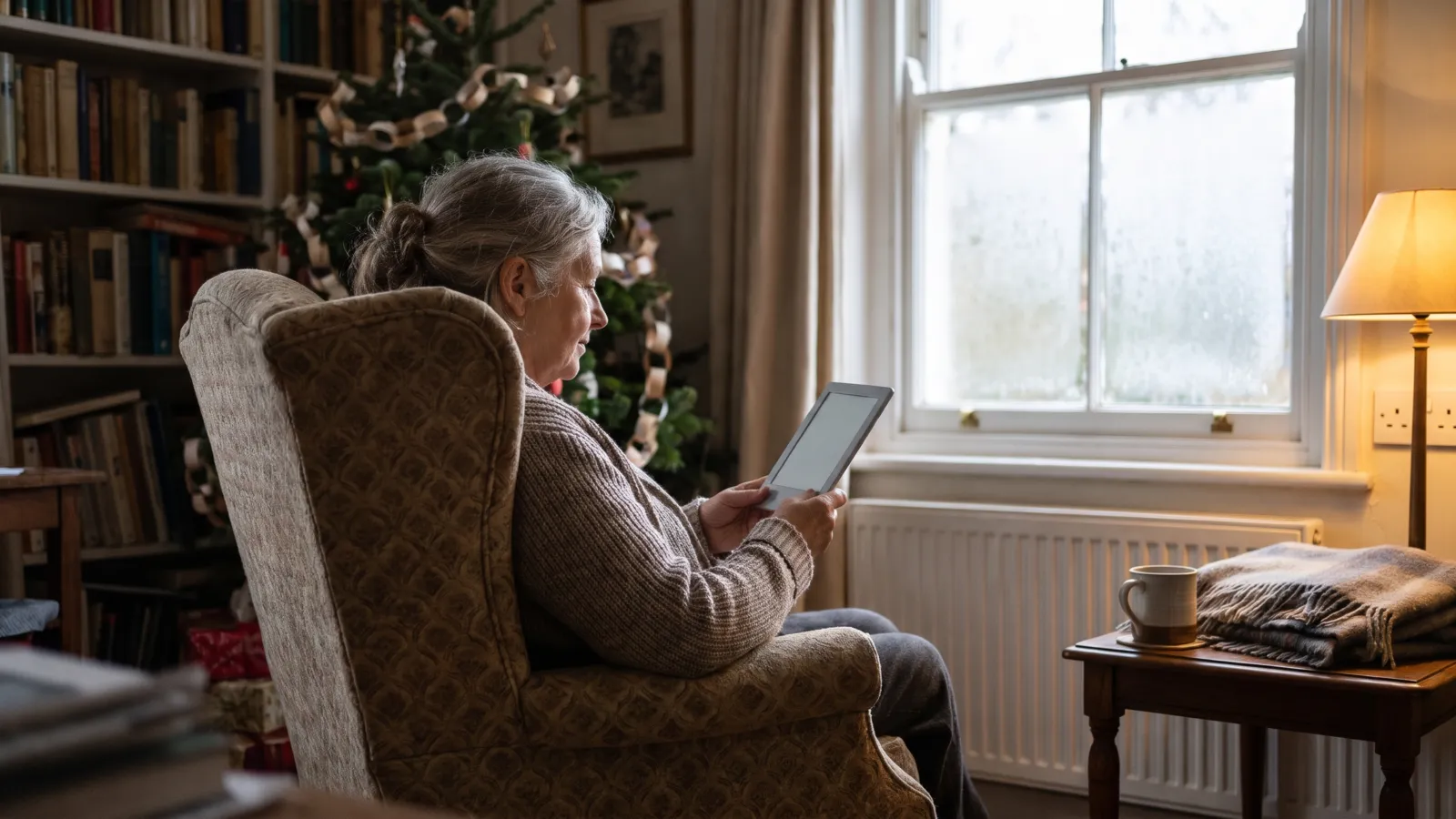
- Two brands dominate: Amazon's Kindle and Rakuten's Kobo. Which? finds Kindles easy to set up and use; Kobo has free library borrowing built in, which Kindle doesn't.
- A basic model is enough for most people. Which? says superb basic e-readers cost around £120. Spend more for waterproofing, a bigger screen or a light that warms in the evening.
- Cheaper Kindles can show adverts on the lock screen. Which? says you pay about £10 more to avoid them, and that's the version to give.
- Nobody needs a subscription to use an e-reader. Books are bought one at a time, and library books are free on Kobo. Only heavy readers need Kindle Unlimited or Kobo Plus.
- For an older reader, the big wins are adjustable text size, a front light, long battery life and a device that's lighter than a paperback. Set it up before you wrap it.
Why an e-reader makes a good gift, and for whom
An e-reader is one of the few gadgets that gets simpler with age. It does one thing. The battery lasts weeks. The screen looks like paper and works in sunlight. The text can be made as big as you like. For a reader who travels, a reader with failing eyesight, or a reader who has run out of shelf space, it's an unusually practical present.
Which? puts the case plainly: "E-readers are designed to be light and slim – even lighter than the average paperback – and offer weeks of battery life at a time. They also tend to be cheaper than most tablets, with superb basic models costing around £120." It also notes the screen advantage over a phone or tablet: "The e-ink display of e-readers is designed to be easier on the eye, so you should be able to comfortably read even under direct sunlight."
The person it's wrong for is the one who loves the physical book, or who wants a tablet for everything else. Which? is clear that tablets "typically display colour images and content better and are more versatile devices", but that for reading alone, "a dedicated e-reader still the best choice for enjoying your ebook library." If your person has said they'd never give up paper, believe them.
This guide is for choosing one for someone else. Our gifts for mum and gifts for grandparents guides have picks across other categories too.
Our picks for this guide
 Photo: Amazon
A mum, dad or teenager who reads most nights and wants to carry a library in a bag.
as of 23 Nov 2026, 18:27 GMT · Details
Product prices and availability are accurate as of the date/time indicated and are subject to change. Any price and availability information displayed on Amazon.co.uk at the time of purchase will apply to the purchase of this product. Photo: Amazon
A mum who likes flowers and crafts and would enjoy an evening of quiet building.
as of 23 Nov 2026, 18:27 GMT · Details
Product prices and availability are accurate as of the date/time indicated and are subject to change. Any price and availability information displayed on Amazon.co.uk at the time of purchase will apply to the purchase of this product. Photo: Amazon
A mum who winds down with a candle and prefers natural scents over sweet ones.
as of 23 Nov 2026, 18:27 GMT · Details
Product prices and availability are accurate as of the date/time indicated and are subject to change. Any price and availability information displayed on Amazon.co.uk at the time of purchase will apply to the purchase of this product.Kindle or Kobo: the choice that matters most
Which? says "The e-reader market is dominated by Amazon's Kindle and Rakuten's Kobo", with newer brands such as Pocketbook behind them. The choice between the two big names is less about the hardware, which is similar, and more about the shop behind it and what the recipient will do with it.
Kindle's strengths are ease and the Amazon ecosystem. Which? says: "We've found Kindle models to be universally easy to set up and use. They also have some features that are more intuitive than or even missing (such as text-to-speech) from Kobo e-readers." If the recipient already shops with Amazon, a Kindle slots into an account they have. Which? also gives Kindle the edge for periodicals: "Kindle has the advantage in terms of the ability to read magazines and newspapers on your e-reader."
Kobo's strength is the library. Which? explains that the Libby library app "is built directly into Kobo and newer Pocketbook devices, but isn't compatible with Kindle." With a library card, a Kobo owner can borrow ebooks free, straight from the device, if their local library uses Libby. For a heavy reader on a budget, or a grandparent who's a lifelong library user, that's a real advantage. Kobo also reads the open EPUB format directly.
One thing worth knowing about Kindle: Which? reports that Amazon "most recently restricted the ability to transfer purchased ebooks downloaded on your Kindle onto your computer", a feature that used to let people back up their collection. Kindle owners can still download books over wi-fi and send files to the device. It matters only to the kind of reader who likes to keep their own copies.
- Choose Kindle if they already use Amazon, want magazines and newspapers, or want the simplest set-up.
- Choose Kobo if they use the library, prefer not to be tied to Amazon, or read a lot of EPUB files.
- Either way, check which service their local library uses before you count on free borrowing.
Screen, size and light
E-reader screens are measured in inches and in pixels per inch. Which? says the models it tests range from 6 inches to 10.3 inches, "but most are typically either 6 inches or 7 inches", and that "A bigger screen doesn't automatically mean a better e-reader". A 6-inch screen fits a coat pocket; a 7-inch one fits a handbag and shows more text at a large font size, which matters for an older reader. The 10-inch models are for people who annotate documents or read comics.
Sharpness is the number after the size. Which? notes that "the more you spend on an e-reader, the higher the resolution of the screen (meaning it looks sharper), measured in pixels per inch (ppi)". Most current models from the main brands are listed at 300 ppi for black and white text, and that's plenty. Colour e-readers exist, but Which? says the colour models "still mostly lag behind traditional greyscale alternatives", and the colour resolution is lower. For novels, buy greyscale.
The front light is the feature most worth paying for. Which? explains that all current Kobo and Kindle models have lights, and that "Some have lights that adapt to the time of day, so as it gets later, the light will turn a warmer yellow (rather than the harsher, bluer light used during the daytime)." For someone who reads in bed, that warm light is the difference between a device they use and one they don't. Which? adds that for anyone worried about eye strain, "consider a model that comes with a screen light adjuster feature".
Waterproofing, storage and battery
Waterproofing is the main reason to step up from the cheapest model. Which? says: "An e-reader that can survive an unexpected rain shower or even a (brief) dip in the bath is handy. We test all e-readers with claimed waterproofing by plunging them in soapy water." The rating to look for is IPX8, which is what the waterproof Kindle and Kobo models in Which?'s list carry. For a bath reader, a beach reader or anyone who reads by a pool, pay for it. For a sofa reader, it's optional.
Storage is easy: almost nobody needs more. Which? says more storage "inevitably adds to the price of an e-reader, and only people planning to download lots of image-heavy content, such as comics and graphic novels, or audiobooks, are likely to need a lot." Text books are tiny. The base storage on current models holds thousands.
Battery life is measured in weeks on all of them, so it isn't a deciding factor. What is worth checking is the charging cable. Newer models use USB-C; some older ones still in the shops use micro-USB. For a recipient who already has USB-C phone chargers, USB-C is one less cable to lose.
Audiobooks are a niche. Many models support them over Bluetooth headphones, and Which? notes that Kindles are compatible with Audible. But audiobooks eat storage and battery, and most people listen on their phone. Don't pay extra for audiobook features unless the recipient has asked.
- Waterproof (IPX8): worth it for bath, beach or pool readers.
- Storage: the base amount is enough unless they read comics or listen to audiobooks on it.
- Charging: prefer USB-C if the recipient already has those cables.
- Buttons: a few models have physical page-turn buttons, which some older readers prefer to swiping.
Choosing for an older reader
E-readers are often bought for parents and grandparents, and the reasons are good. Text size is adjustable, so small print stops being a barrier. The device is lighter than a hardback and easier to hold with one hand or with arthritis. The front light means reading in bed without a lamp. And the battery lasts long enough that charging isn't a daily chore.
Which? has a specific point about Kindle's text-to-speech feature, which can read a book aloud through headphones or a speaker, and which it notes is missing from Kobo. For someone whose eyesight is going, that's worth knowing. On the other side, a Kobo's built-in library borrowing suits the lifelong library user who'd rather not pay per book.
The thing that decides whether the gift gets used is the set-up. Do it before you wrap it: create or sign in to the account, connect it to their wi-fi if you know the password, set the text size large, turn on the warm light, and load two or three books you know they'll want. Then write a one-page note on how to turn it on, turn a page, and make the text bigger. A device that arrives ready to read is a present. A device that arrives in a box with a setup wizard is a job.
Consider a case with a cover that wakes and sleeps the device, and, for someone who finds touchscreens fiddly, a model with physical page-turn buttons. And be realistic about the ecosystem: if you set it up on your own account, you'll be the one buying the books. A separate account in their name, with a gift card loaded, keeps it theirs.
- Set up the account, wi-fi and text size before wrapping.
- Load a few books they'll want on day one.
- Turn on the warm front light and show them where the slider is.
- Write a short note: on, off, next page, bigger text.
- Get a case that wakes and sleeps the device.
Old models, old Kindles and what to avoid
E-readers are sold alongside their predecessors for years, and the older model is often discounted. That can be a bargain, but check two things: the charging port, and the age. Which? reported that in 2022 Amazon cut off store access on some Kindles more than ten years old. Its article explains: "The change was brought in on 17 August 2022 and affects some Kindles that are more than 10 years old." Owners could still read what they had, and could buy on a computer and send books across, but direct browsing was gone. A current model has a long life ahead of it; a second-hand one from a decade ago may not.
Don't buy a tablet instead because it does more. For reading, Which?'s verdict is that a tablet's "vastly poorer battery life and a less eye-friendly screen" make the dedicated e-reader the better choice. And don't be swayed by colour unless the recipient reads comics or picture-heavy magazines; Which? found the colour models lag the greyscale ones for ordinary reading.
Finally, keep the receipt and the box. If the recipient already has one, or prefers the other brand, an unopened e-reader is easy to exchange. An opened and registered one is harder.
Our picks for this guide
Photo: AmazonA mum, dad or teenager who reads most nights and wants to carry a library in a bag.
as of 23 Nov 2026, 18:27 GMT · Details
Product prices and availability are accurate as of the date/time indicated and are subject to change. Any price and availability information displayed on Amazon.co.uk at the time of purchase will apply to the purchase of this product.Photo: AmazonA mum who likes flowers and crafts and would enjoy an evening of quiet building.
as of 23 Nov 2026, 18:27 GMT · Details
Product prices and availability are accurate as of the date/time indicated and are subject to change. Any price and availability information displayed on Amazon.co.uk at the time of purchase will apply to the purchase of this product.Photo: AmazonA mum who winds down with a candle and prefers natural scents over sweet ones.
as of 23 Nov 2026, 18:27 GMT · Details
Product prices and availability are accurate as of the date/time indicated and are subject to change. Any price and availability information displayed on Amazon.co.uk at the time of purchase will apply to the purchase of this product.Sign in, connect wi-fi, make the text big, turn on the warm light and load three books. The difference between an e-reader that gets used and one that stays in the drawer is almost always the first ten minutes, and you can do those for them.
Questions
Which Kindle is best as a gift?
For most people, a current basic or mid-range model without ads. Pay more for waterproofing if they read in the bath or on holiday, and for a warm front light if they read in bed. Which? says superb basic e-readers cost around £120 and that you pay about £10 more to avoid lock-screen adverts.
Is Kobo better than Kindle for a gift?
It depends on the reader. Which? finds Kindles the easiest to set up and better for magazines and newspapers, with text-to-speech. Kobo has free library borrowing through Libby built in, which Kindle lacks, and reads EPUB files directly. If they use the library, Kobo; if they use Amazon, Kindle.
Do you need a subscription to use a Kindle?
No. Books are bought individually from the Kindle store, and out-of-copyright classics are free. Kindle Unlimited and Prime Reading are optional extras for heavy readers. Give a gift card for books rather than a subscription unless they've asked for one.
Are Kindles waterproof?
Some are. Look for an IPX8 rating, which the waterproof Kindle and Kobo models carry. The cheapest models usually aren't waterproof. Which? tests waterproofing claims by plunging devices in soapy water.
What is the best e-reader for an elderly person?
One with a large adjustable font, a front light that can be warmed for evening reading, a screen of 6 or 7 inches, and long battery life. Kindle's text-to-speech can help if eyesight is poor. Physical page-turn buttons suit people who find swiping fiddly. Set it up fully before giving it.
What does 'with ads' mean on a Kindle?
Adverts appear on the lock screen and home screen of the cheaper version, though not inside books. Which? says you pay about £10 more for the ad-free version, which is the one to buy as a gift.
Sources (3)
Read next
 Gifts for someone who has everything: how to choose something they'll actually useFive kinds of present that work for the person who wants nothing: experiences, consumables, upgrades, personal…
 Experience gifts in the UK: what to check before you buy a voucher or book a dateHow to give an experience that actually happens: expiry and booking rules, refunds, weather and location, open…
 Personalised gifts: how far ahead to order, and why you can't send them backMaking times, proofs and the returns rules for personalised items. Why the 14-day cooling-off period doesn't a…
 Subscription gifts: magazines, coffee and boxes, and how to avoid giving someone a billHow to give a magazine, coffee or box subscription without it rolling on to someone's card. Prepaid versus aut…