Buying second-hand toys safely: what to check, recalls, cleaning, and what never to buy used
A practical guide to second-hand toys: the checks that matter, how to search the GOV.UK recall list, how to clean soft toys and plastic, and the few things never to buy used.
By Sam · Updated 5 November 2026
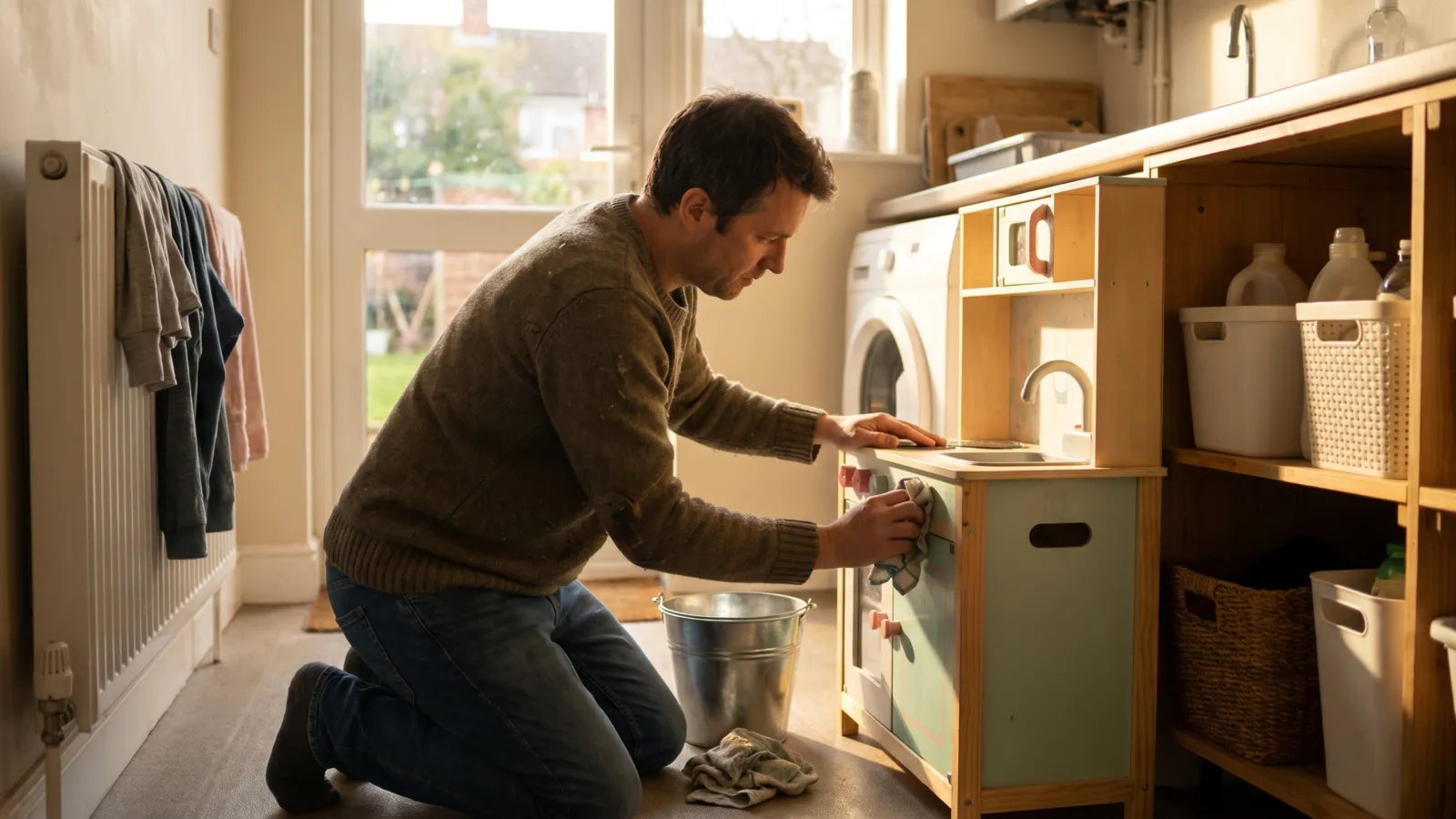
- Second-hand toys are a good idea: cheaper, greener, and the toys that survive to a second owner are often the sturdy ones. The Office for Product Safety and Standards (OPSS) published its own guidance on buying second-hand in June 2025 and does not warn people off; it tells them what to check.
- Three checks cover most of the risk: the toy has a CE or UKCA mark, it is not on the GOV.UK recall list, and it is intact with no loose parts, cracks or exposed stuffing.
- Missing instructions are the hidden problem. RoSPA points out that the age warning, especially whether a toy is unsuitable for under-threes, usually goes with the packaging. Look the toy up on the maker's website.
- Never buy a child car seat second-hand. OPSS and RoSPA both say so: damage from a previous accident can be invisible. Cot mattresses are the other baby item to treat with great caution.
- Soft toys go through a hot wash; hard plastic gets soap, water and a dry; anything with a sealed button battery or small magnets gets a closer look. Our gifts for babies guide notes which items are worth buying new.
Why second-hand is worth doing, and where the risk actually is
The case for second-hand toys makes itself at the checkout. A wooden train set, a box of building bricks or a ride-on that cost a great deal new can be had for a fraction of the price from a charity shop, a school fair or a local selling group, and the toy has already proved it survives children. OPSS, the government's product safety regulator, opens its guidance on second-hand goods by acknowledging this: "In the current economic climate second-hand goods can also be a good way to save money and support local businesses."
The same guidance is honest about where the risk sits: "while used products sold commercially must be safe, they may pose increased safety risks due to worn out components, a lack of modern safety features and modified elements, some of which may not be visible or obvious to users. In addition, some vintage products may no longer meet current safety regulations, for example containing banned substances such as certain chemicals." That last point matters for genuinely old toys: painted tin and early plastics from decades ago were made under different rules.
RoSPA's version is blunter: "buying a product second-hand is never as safe as buying something new." That is true as a statement about certainty, because you cannot know a used toy's history. It is not a reason to avoid second-hand toys; it is a reason to do the checks below, which take a minute or two per toy and remove most of the uncertainty.
Note the word 'commercially' in the OPSS text. A shop or a business seller has a legal duty to sell safe goods, new or used. A private seller at a car boot sale or on a local selling group does not carry the same duties, and OPSS's 12 rules campaign makes the point: "Jumble and car boot sales are a great place to get a good deal, but it’s worth taking extra care. Worn or old toys may no longer be safe."
Our picks for this guide
 Photo: Amazon
A newborn or young baby who spends time in a pram or car seat.
as of 23 Nov 2026, 18:27 GMT · Details
Product prices and availability are accurate as of the date/time indicated and are subject to change. Any price and availability information displayed on Amazon.co.uk at the time of purchase will apply to the purchase of this product.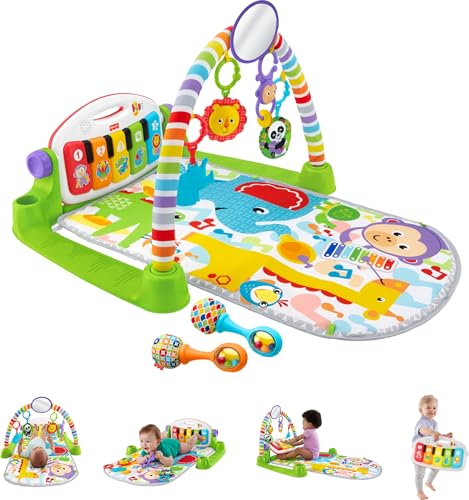 Photo: Amazon
A newborn's parents who want one play mat that does tummy time, kicking and sitting-up play.
as of 23 Nov 2026, 18:27 GMT · Details
Product prices and availability are accurate as of the date/time indicated and are subject to change. Any price and availability information displayed on Amazon.co.uk at the time of purchase will apply to the purchase of this product. Photo: Amazon
A baby from about six months who is starting to grab, stack and knock things over on purpose.
as of 23 Nov 2026, 18:27 GMT · Details
Product prices and availability are accurate as of the date/time indicated and are subject to change. Any price and availability information displayed on Amazon.co.uk at the time of purchase will apply to the purchase of this product.The first check: marks and the maker
Start where you would with a new toy. RoSPA's advice for second-hand toys is unambiguous: "The main thing to look out for on toys is whether they have a CE mark or UKCA mark. This indicates that the product complies with European or British safety requirements. It gives a sign to consumers that the toy is safe. If it does not have a CE Mark or UKCA mark, don't buy it."
On a used toy the mark may be on the toy itself, moulded into the plastic underneath or printed on a sewn-in label, rather than on packaging that is long gone. Turn it over and look. A toy with no mark anywhere is either very old, a non-toy novelty, or an import that never met the rules, and for a child under three none of those is worth the saving.
The maker's name is the second thing to find, for a practical reason: it lets you look the toy up. Established brands keep instruction sheets, age ranges and spare parts lists on their websites, which solves the missing-instructions problem below. A toy you cannot identify is a toy you cannot check against the recall list either.
If you are buying used from a shop rather than a private seller, GOV.UK's general advice applies: register it if the maker offers registration. The consumer safety page says "You can register second-hand products as well as new ones", and registration is how you hear about a recall.
The second check: is it on the recall list?
Recalls are the second-hand buyer's particular problem. When a toy is recalled, the maker contacts the people it knows about, shops pull it from shelves, and the notice goes on GOV.UK. None of that reaches a toy already in a loft, which is where second-hand stock comes from. OPSS's second-hand guidance lists this as the first thing to do: "Ensure the product is not subject to a Product Recall – check the list of Product Safety Alerts, Reports and Recalls."
The list is the product safety alerts, reports and recalls page on GOV.UK. Search by the toy's name, the brand, or a word from the description. Toys are the biggest category on it, and the typical reasons are the ones that matter most for small children: small parts that come loose, accessible button batteries, over-strength magnets, and banned chemicals. In 2026 a long run of recalls covered sand-filled stretchy toys and craft kits over asbestos in the sand, exactly the kind of cheap novelty that ends up in a charity shop bag.
RoSPA suggests a second use for the search: "before buying a product, check the internet to see if there has been a recall on the item or other problem, which could explain if a lot of those products are being sold at car boots." If a toy turns up on the list, OPSS's advice is to stop using it and follow the notice, which usually means returning it to the shop that sold it new, something a second-hand buyer cannot do. So the time to check is before you buy, not after.
If you have already bought a used toy and think it is unsafe, OPSS says: "If you have already purchased a used item and suspect a safety issue, you can report to relevant authorities in your region who may share with local trading standards." In England and Wales that means the Citizens Advice consumer service.
The third check: condition, with the toy in your hands
OPSS's guidance makes the case for seeing before buying: "If possible, physically check an item before purchase, especially if buying a product where any wear and tear may make it more dangerous to the user, such as a child’s toy." That favours charity shops, school fairs and collection-in-person over posted marketplace purchases, at least for anything going to a young child.
RoSPA describes what to look for: "Although a toy may look pristine, the structural integrity and inner workings of the product may be questionable, especially if it has been squashed, bashed around and generally well-loved by a child. Ask yourself whether the parts still fit together, does it work properly, how strong is it and could sharp pieces fall off". Pull gently at eyes, wheels, buttons and limbs. Flex plastic to find cracks. Check seams on soft toys for leaking stuffing or pellets.
Then the two hidden hazards. If the toy has a battery, check how the compartment closes: it should need a screwdriver or a tool, the screw should be present and the plastic around it uncracked. If the toy has magnets, make sure every magnetic piece is sealed inside something too big to swallow and nothing rattles loose. A toy with a snap-off battery door or a loose magnet is not one to repair; it is one to leave.
Last, the OPSS point about modifications: "Confirm from the seller that no modifications have been made to a product to extend its lifespan or adjust its performance." With toys this is usually the glued-back wheel, the replacement strap or the ride-on with a different charger. Ask.
- CE or UKCA mark on the toy or its label
- Maker's name, so you can find the instructions and age range
- Not on the GOV.UK recall list
- Nothing loose: eyes, wheels, limbs, buttons, seams
- No cracks in plastic, no exposed stuffing or pellets
- Battery door needs a tool; magnets sealed in large pieces
- No home repairs or swapped parts
Missing instructions and the age warning
The packaging is where most of a toy's safety information lives, and it is the first thing a previous owner threw away. RoSPA: "Second-hand toys are often missing instructions, which include important information such as the age range of the product, particularly whether it is suitable for children under 36 months due to choking hazards, and other safety warnings."
The under-36-months warning is the one that matters. It means the toy has not been tested to the stricter standard for under-threes and probably has small parts. On a boxed toy it is printed on the front; on a loose second-hand toy you may have no way to know except by looking it up. RoSPA's solution is simple: "For lost instructions, check manufacturers' websites for information." GOV.UK's consumer advice says the same: "If the instructions are missing, they may be available on the manufacturer’s website."
If you cannot identify the toy well enough to look it up, use the small-parts rule of thumb instead. Anything that fits entirely inside a toilet roll tube is a choking risk for a child under three, and a toy that has such pieces, or could shed them, belongs with older children. RoSPA's general toy advice is to "Check for loose hair and small parts, sharp edges and points" and to "Make sure the toy is suitable for the child check the age range".
For things that need an adult around, like chemistry sets, craft kits with small components or anything with a heating element, the instructions are the safety equipment. The 12 rules campaign says: "Read all the instructions so you know how to control any hazards." If the instructions are gone and not online, that is a toy to pass on.
Cleaning second-hand toys
RoSPA does not spare the squeamish on this point: "a new teddy bear should be exceptionally clean but a second-hand one may be teeming with germs from being put in a child's mouth, dragged along the floor, taken to bed every night, or even left on a cat litter tray or pet's bedding." Its advice: "To get rid of germs, give any stuffed toy a good wash in hot water before giving it to a child."
In practice that means the washing machine for most soft toys, on as hot a cycle as the label allows, inside a pillowcase or mesh bag to protect eyes and seams, then a full dry. A soft toy that cannot be washed, because it has a sound box or a battery, is a poor second-hand buy for a baby; for an older child, a wipe with a damp cloth and a few hours in sunshine is the compromise.
Hard plastic and wooden toys are easier: warm water, washing-up liquid, a scrubbing brush for the grooves, a rinse and a thorough dry. Bath toys that squirt water are the exception; if they have a hole and have been used, there is mould inside that no amount of outside cleaning reaches, and they are not worth buying used. Avoid soaking wooden toys, which swell and split. Remove batteries before washing anything electronic, and let it dry completely before refitting them.
Check again after cleaning. Hot water and handling will find a loose eye or a weak seam that the shop light did not. A toy that comes out of the wash with a part missing has just told you something useful.
What never to buy second-hand
A short list, and it is really the same item in several forms: anything whose job is to protect a child in an impact. OPSS's second-hand guidance says: "Do not buy second-hand baby car seats as the structural integrity can be compromised by accidents and damage may not be visible." RoSPA explains the principle: these are "one hit" products, and "involvement in an accident or simply dropping the item can affect the internal structure, even if any damage is not visible on the exterior. If it is not structurally sound, then it will not protect you or your child."
RoSPA extends the same rule to crash helmets, cycle helmets and riding helmets, and draws one distinction: a seat or helmet from a close relative whose full history you know is a different matter from one at a car boot sale. Its conclusion is still: "Our advice is to never buy one of these items if it has been involved in some kind of accident already." For a stranger's car seat, you cannot know, so the answer is no.
Cot mattresses are the other baby item OPSS singles out: "Only purchase cot mattresses if they are in a good condition." The NHS advice on reducing the risk of sudden infant death is to "use a firm, flat mattress", and a used mattress that has softened, sagged or been wet does not meet that. OPSS points to the Lullaby Trust for detail; the short version is that a new mattress for each baby is the safer choice, and if you do reuse one it must be clean, dry, firm and undamaged.
Beyond those, use judgement rather than rules. Anything with a frayed cord, a missing guard, or a battery compartment that no longer closes is a no. Second-hand electrical toys deserve the standard check RoSPA gives all used electricals: look for exposed wires and damage to the cable, and be cautious about chargers, which RoSPA says can lack safety features and overheat when cheaply made. If a ride-on comes with a charger that is not the original, buy the correct one new.
- Child car seats: never, unless from someone you know who can vouch for its whole history
- Cycle, riding and other safety helmets: the same rule
- Cot mattresses: only if firm, clean, dry and undamaged, and ideally new for each baby
- Bath toys with water holes
- Anything with a damaged battery compartment, loose magnets or a frayed cable
- Anything you cannot identify well enough to check for a recall
Where to buy, and selling on
Charity shops and school or nursery fairs are the easiest places to buy well: you can handle the toy, the volunteers have usually already discarded the obviously broken, and the money goes somewhere useful. Local selling groups and marketplace apps are fine for larger items like ride-ons and play kitchens, where collection in person lets you check condition. Posted second-hand toys from anonymous sellers are where the checks are hardest, so keep those to older children's toys and known brands.
OPSS's reminder about trusted sources applies: "It is therefore always important consumers check instructions are included and ensure the purchase is from a trusted source." A seller who can tell you where the toy came from, how old the child who used it was and whether anything was ever repaired is a seller you can buy from with some confidence.
When your own children outgrow toys, the same rules run in reverse. Do not sell or donate anything on the never-buy list, anything recalled, or anything broken. Include the instructions if you still have them, or write the maker and model on a sticky label so the next buyer can look it up. Second-hand toys work as a system when each owner passes on what the next one needs to know.
Our picks for this guide
Photo: AmazonA newborn or young baby who spends time in a pram or car seat.
as of 23 Nov 2026, 18:27 GMT · Details
Product prices and availability are accurate as of the date/time indicated and are subject to change. Any price and availability information displayed on Amazon.co.uk at the time of purchase will apply to the purchase of this product.Photo: AmazonA newborn's parents who want one play mat that does tummy time, kicking and sitting-up play.
as of 23 Nov 2026, 18:27 GMT · Details
Product prices and availability are accurate as of the date/time indicated and are subject to change. Any price and availability information displayed on Amazon.co.uk at the time of purchase will apply to the purchase of this product.Photo: AmazonA baby from about six months who is starting to grab, stack and knock things over on purpose.
as of 23 Nov 2026, 18:27 GMT · Details
Product prices and availability are accurate as of the date/time indicated and are subject to change. Any price and availability information displayed on Amazon.co.uk at the time of purchase will apply to the purchase of this product.Before you pay for a used toy, search its name on the GOV.UK product recall list and, if the packaging is gone, on the maker's website for its age range. Those two searches catch the recalled toy and the under-three choking warning, the two things a charity shop shelf cannot tell you.
Questions
Is it safe to buy second-hand toys?
Usually, with checks. OPSS says used products can carry extra risk from wear, missing safety features and old regulations, so check for a CE or UKCA mark, search the GOV.UK recall list, inspect the toy in your hands for loose or broken parts, and look up the age range on the maker's website.
How do I check if a toy has been recalled?
Search the product safety alerts, reports and recalls list on GOV.UK by the toy's name or brand. OPSS's second-hand guidance says to do this before buying. If a used toy you own appears, stop using it and follow the notice.
What should you never buy second-hand for a baby?
A car seat. OPSS says not to buy second-hand baby car seats because damage from an accident may be invisible, and RoSPA says the same for helmets. Cot mattresses should only be reused if firm, clean, dry and undamaged, and the NHS advice is a firm, flat mattress.
How do you clean second-hand soft toys?
RoSPA advises a good wash in hot water before giving a stuffed toy to a child. Use the washing machine on the hottest cycle the label allows, inside a pillowcase, then dry fully. Soft toys with sound boxes or batteries that cannot be washed are a poor buy for a baby.
What if a second-hand toy has no instructions or age warning?
Look it up on the manufacturer's website, which RoSPA and GOV.UK both recommend. If you cannot identify the toy, assume anything with small parts is unsuitable for children under three, and skip toys like chemistry sets that need instructions to be used safely.
Do charity shops check toys are safe?
Shops selling used goods commercially must sell safe products and most discard obvious breakages, but they cannot know a toy's history or check every recall. Do your own three checks: mark, recall list, condition.
Sources (6)
- OPSS on GOV.UK, Consumer products: buying second-hand goods (published 3 June 2025), read 5 November 2026
- RoSPA, Second-hand goods safety, read 5 November 2026
- RoSPA, Toy safety, read 5 November 2026
- GOV.UK, Consumer products: staying safe (updated 29 July 2024), read 5 November 2026
- GOV.UK, 12 rules to help you shop safely for children this Christmas (10 December 2018), read 5 November 2026
- NHS, Reduce the risk of sudden infant death syndrome (SIDS), read 5 November 2026
Read next
 Toy safety marks in the UK: what UKCA, CE and the Lion Mark mean, and the age warningWhat the UKCA and CE marks on a toy actually promise, why the maker's address matters as much, how to read the…
 Button batteries and magnets in toys: why they are dangerous, what the law says, what to checkWhy a swallowed button battery or a pair of small magnets is an emergency, what UK rules require of toy makers…
 Buying a tablet for a child: kids edition or ordinary tablet, and the controls that matterWhether to buy a kids edition or an ordinary tablet, how Apple, Google and Amazon parental controls compare, w…
 Parental controls on games consoles: Switch, PlayStation and Xbox family settings explainedHow to set up family settings on a Nintendo Switch, PlayStation or Xbox before you hand it over: age limits, p…